Embracing the Future: MSU Researchers Use AI to Help Develop Smarter Solutions
By: Nathan Gregory
Mississippi State University faculty are tapping into the potential of artificial intelligence (AI) by using it to augment research and training practices in unexpected ways. This is especially true throughout the MSU Division of Agriculture, Forestry, and Veterinary Medicine (DAFVM). Researchers are using the constantly evolving technology to assist in various tasks, which include enhancing imaging in animal scans, developing catfish vaccines, combatting illegal logging, and advancing precision agriculture.
Smarter Imaging for Better Animal Care
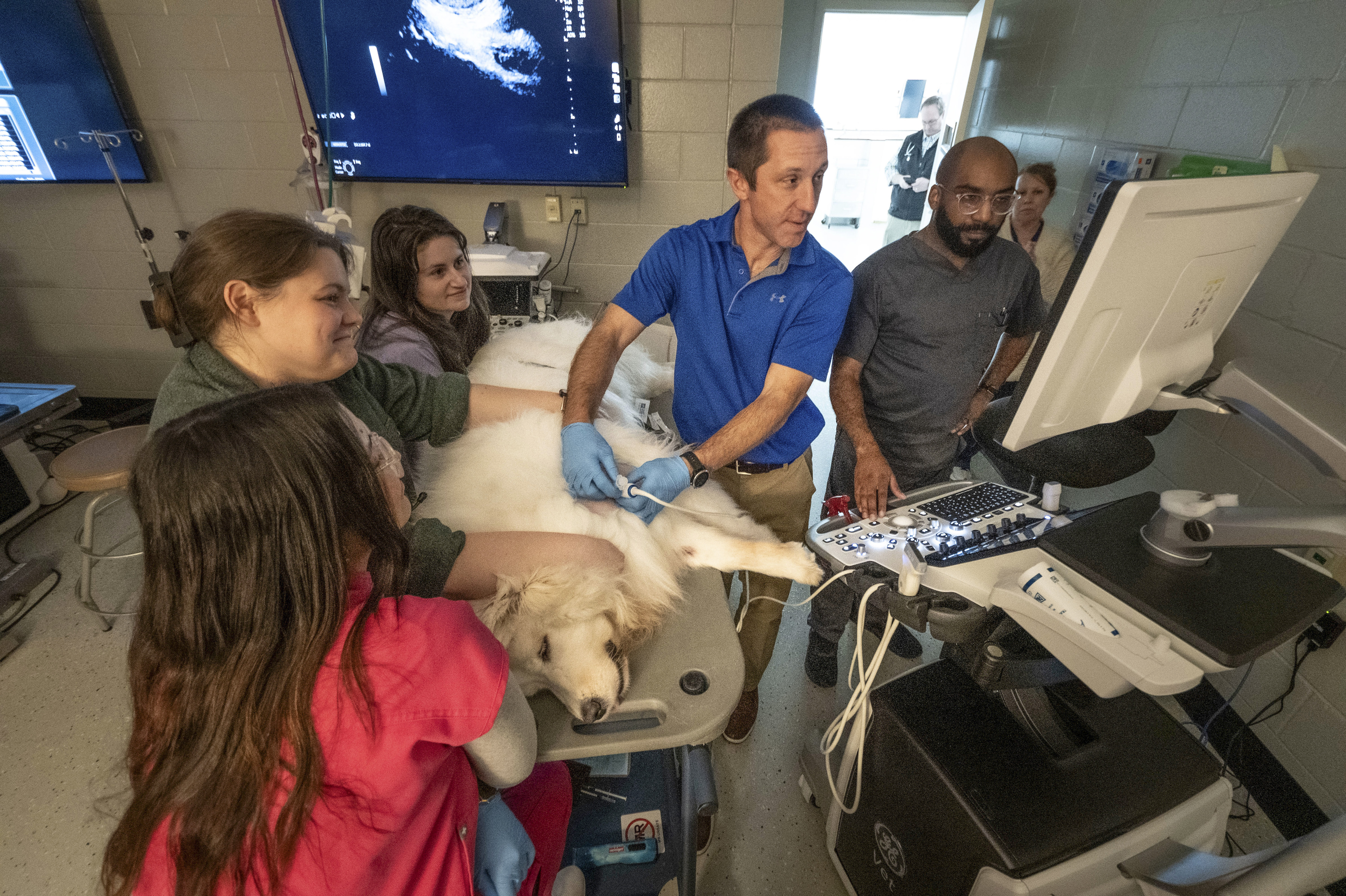
The MSU College of Veterinary Medicine (CVM) is using AI to enhance its diagnostic capabilities through its 3 Tesla MRI scanner technology. Dr. Marc Seitz, CVM associate clinical professor of diagnostic imaging, explained that AI enhances MRI scans by producing higher-quality images in less time.
“If you have ever used a phone with low light to take a picture, AI made that image better. Our MRI is now doing that, too, and not just with images post-processing,” Seitz said. “If AI were used to enhance an image after it was already made, there’s only so much you can do. The AI used in this scanner actually helps the MRI create the image.”
Faster scan times are also beneficial—especially to equine patients.
“With horses, we have a huge concern with scan time because if horses are under anesthesia for too long, they can have adverse effects from it,” he said, “and it can be hard for them to recover.”
Fighting Wood Fraud
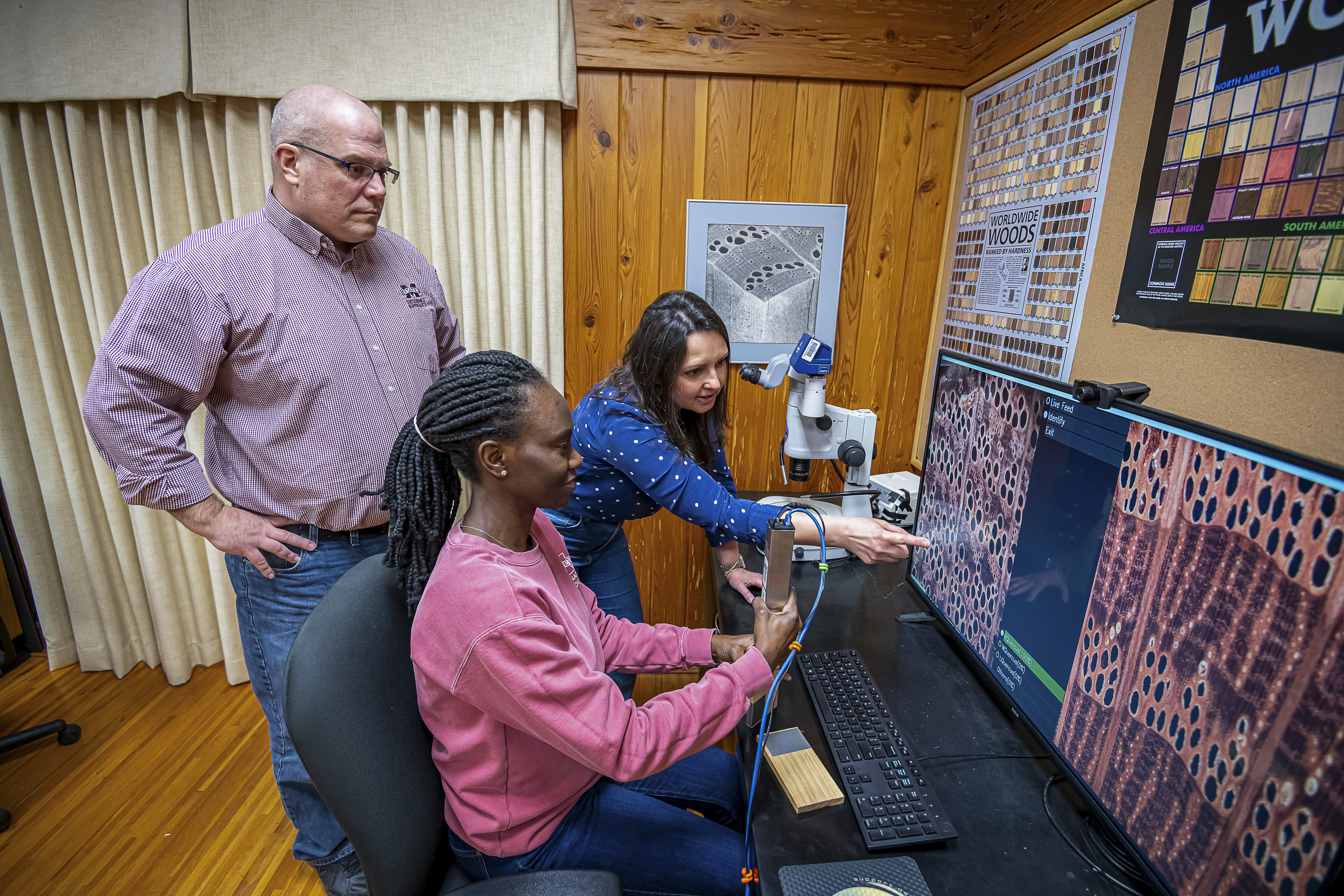
In the MSU Forest and Wildlife Research Center, Dr. Frank Owens and his team are training AI systems to identify wood species. This innovation allows customs officials and procurement professionals to combat illegal logging and species fraud and ease the issue of limited wood anatomists in the U.S.
“In both import and export markets, species fraud means unfair competition for American wood product manufacturers and traders,” he said. “Misidentified imported wood products, including furniture, lumber materials, musical instruments, and household goods—a portion of which are likely to be illegally harvested and traded—compete against products made from domestic material by American manufacturers and against products properly declared by U.S. importers.”
Owens said misidentified imported wood products can have a price advantage because they were made from less expensive alternative species or stolen materials, or because they were brought into the country without incurring full import taxes.
“Misidentified wood products in foreign markets compete against U.S. exports in similar ways, making it more difficult for American wood products to gain a foothold internationally due to unfair price competition,” he said.
Breakthrough Science in Aquaculture
At the MSU Global Center for Aquatic Health and Food Security in Gautier, Assistant Research Professor Dr. Arun Venugopalan is using AI to develop vaccines for one of aquaculture’s most devastating diseases.
The channel catfish virus disease, or CCVD, can result in up to 90 percent mortality in a pond of channel catfish and occurs mostly in catfish less than one year old.
One tool used by Venugopalan and his team is AlphaFold2, an AI system that can predict three-dimensional protein structures from amino acid sequences. This capability is a critical milestone that greatly benefits the development of trial catfish vaccines, he said.
“This is part of a larger effort to understand the characteristics of this virus in depth, which would ultimately help us develop better scientific management strategies, including therapeutics like vaccines,” Venugopalan said. “The virulence factors that enable this virus to kill 90 percent of catfish in ponds remain unknown.
“Cutting-edge AI tools like AlphaFold2 can evaluate the structures of the proteins that interact with the host to unravel how this virus can overcome fish immunity to cause devastating losses for catfish farmers,” he said.
This cutting-edge research contributes to MSU’s No. 1 global ranking in aquaculture by ScholarGPS for the second consecutive year.
Autonomous Agriculture Takes Root
Aimed to establish Mississippi as the “Silicon Valley of agricultural autonomy,” the MSU Agricultural Autonomy Institute launched in 2023 as the first academic institute exclusively dedicated to advancing the automation of traditional agricultural practices and developing the workforce to support this emerging industry.
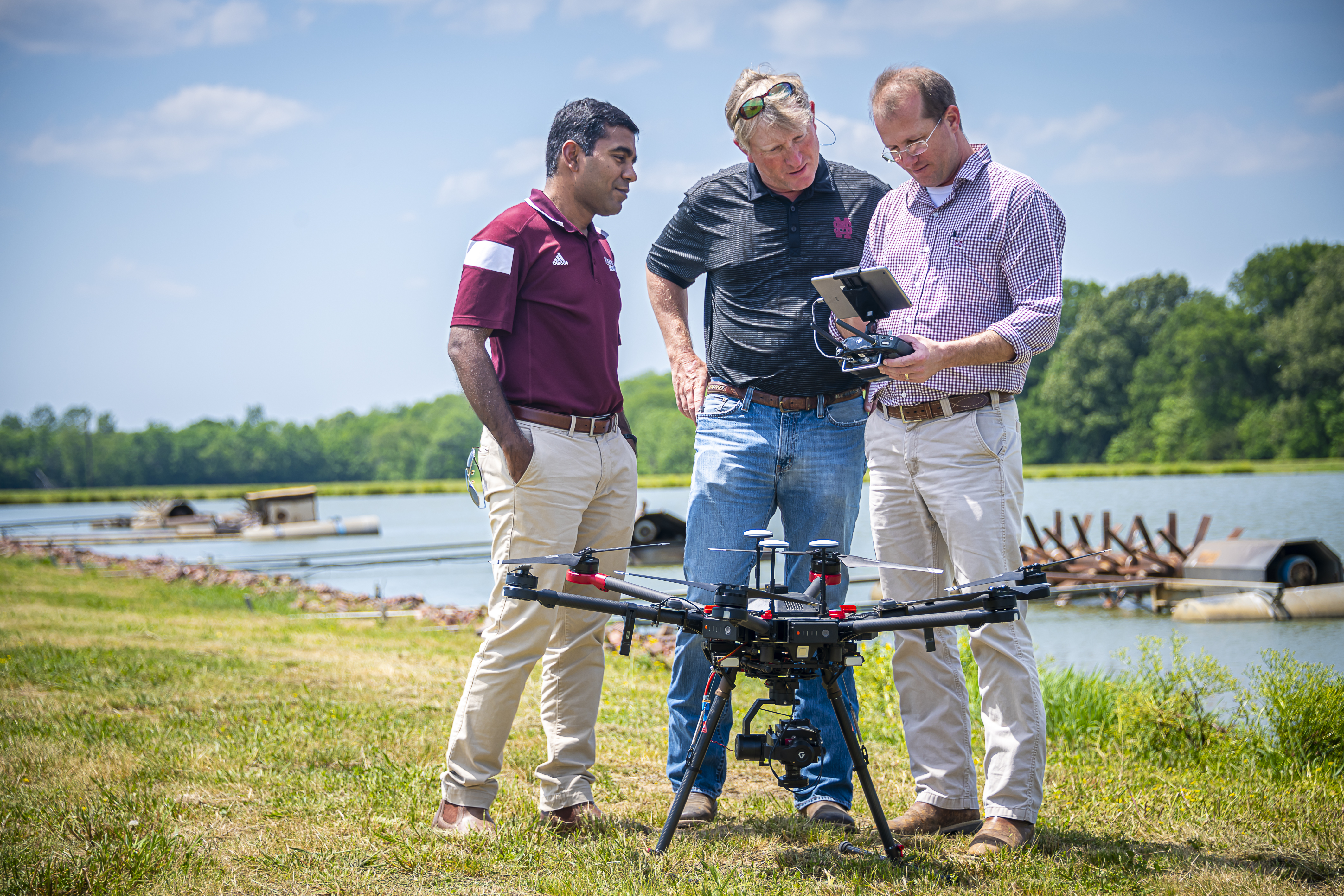
At the AAI’s Autonomous Acres Proving Ground, a 5-acre tract located at the MAFES R. R. Foil Plant Science Research Center, researchers evaluate autonomous vehicle systems that use AI analytics for precision tasks like herbicide application. Unmanned aerial systems with spray capabilities, or “spray drones,” are among the latest autonomous technologies tested.
“I can’t stress enough how well-suited Mississippi State is to do this work, and not only to do the research but to ensure the research ultimately leads to actionable, real-world benefits for our growers,” said Madison Dixon, AAI associate director of research. “We’re able to do that through the Mississippi Agricultural and Forestry Experiment Station. We’re also able to do that through MSU Extension.”
The benefits of AI and autonomous technology are already paying off for row crop grower Jeremy Jack, who owns Silent Shade Planting Company in Belzoni. He noted the ways he has made AI work for him during a panel discussion at the AI in Agriculture Conference hosted by AAI last spring.
“In two minutes with my iPad, I can send a variable rate seeding prescription to a planter in the field. He can accept it, load it, and take off planting. That was a week’s worth of hard work when I was in college,” Jack said. “The programs are so much more intuitive than they used to be. I look at automation and AI working together with a person, giving them a better career path, giving them better job satisfaction, and making us more productive.”